Course
German from the beginning
Language for everyday life, work and communication.
German for life and work.
This course builds the language foundations needed for everyday life and work in Germany. You gradually expand your vocabulary, strengthen your grammar and practise communication in typical situations.
Klett Publishing
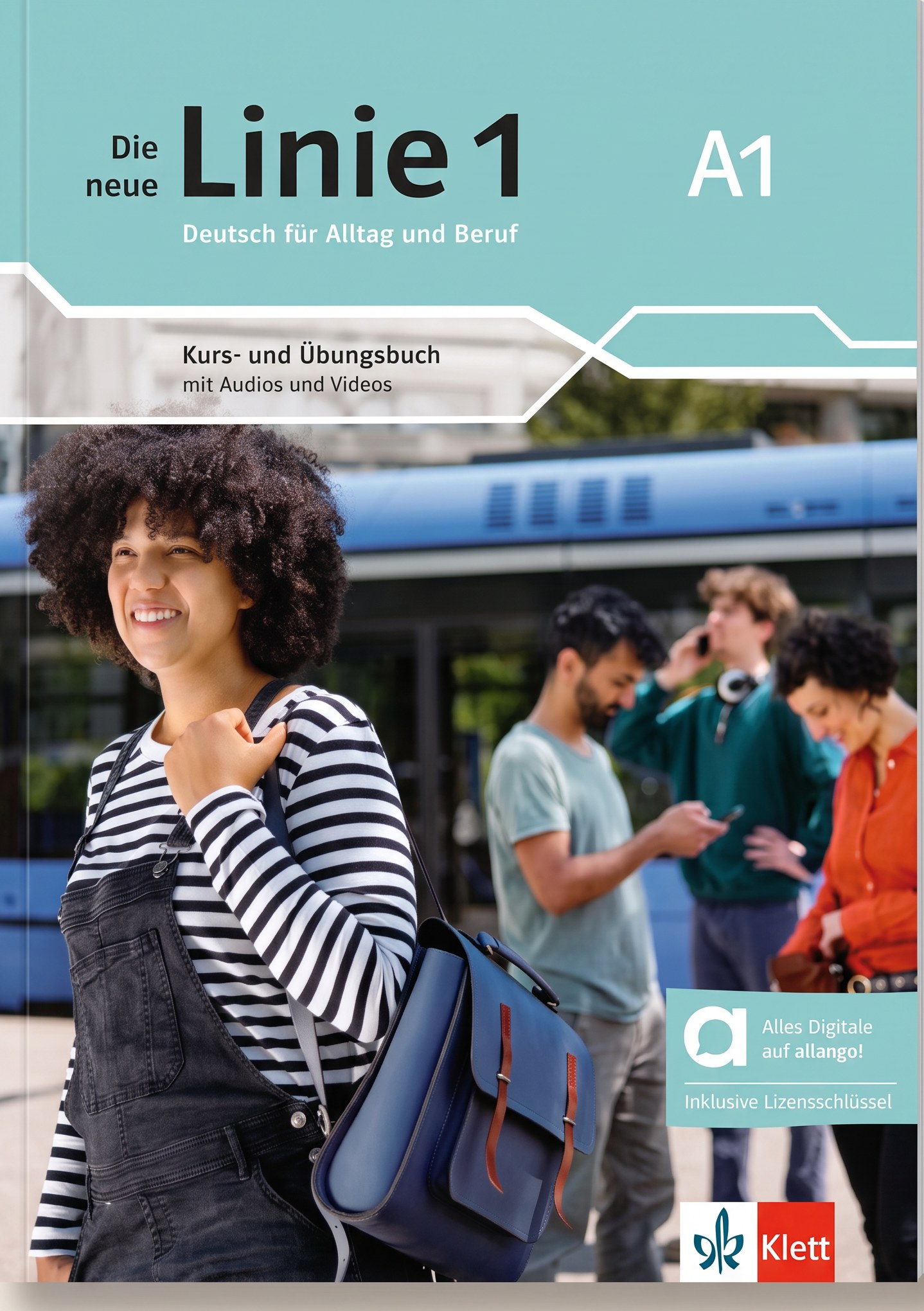
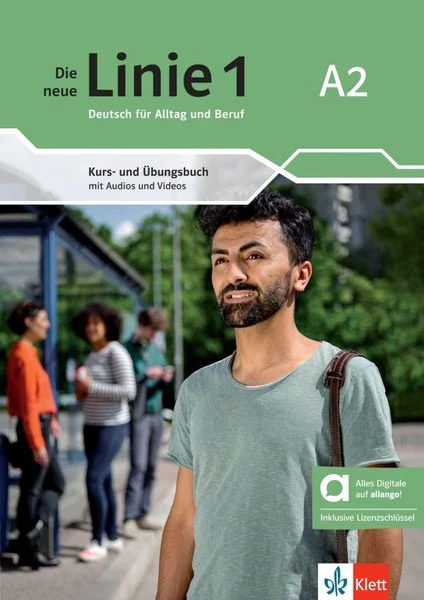
Die neue Linie 1 – A1 & A2
The Wortavia Academy German A1–A2 intensive course is a comprehensive, self-contained programme with additional explanations, exercises, vocabulary work and listening, speaking and writing practice.
- To complement the course, I recommend the textbooks “Die neue Linie 1 – A1” and “Die neue Linie 1 – A2” by Klett.
- They help you consolidate what you learn, review it in a structured way and keep practising on your own.
- The textbooks are a recommendation, not a requirement for taking the course.
Grammar — step by step through 12 modules
From your first sentences about yourself and your family to fuller descriptions of experiences, wishes and plans: grammar is practised in everyday situations, then revisited and developed in later modules.
Module 01
Introducing yourself and meeting others
- Present tense (Präsens): use sein, haben and regular verbs with the correct personal endings; learn the special form of heißen.
- Word order: build simple statements with the conjugated verb in second position.
- Numbers from 0 to 100: write numbers and use them in introductions, for example to give your age.
ExampleIch heiße Anna. Ich bin 28 Jahre alt und habe einen Bruder.
Module 02
Family and relationships
- Possessive articles in the nominative: use mein, dein, sein and ihr to say who people or things belong to.
- Modal verbs können and müssen: talk about abilities and things you need to do.
- The sentence bracket: put the modal verb in second position and the main verb's infinitive at the end.
ExampleMeine Schwester kann gut kochen. Ich muss heute arbeiten.
Module 03
Everyday life, daily routines and leisure
- Separable verbs in the present tense: separate the prefix in verbs such as aufstehen and place it at the end of the sentence.
- Time expressions with am, um, von … bis, vor, nach, seit, gegen and ab: describe routines, appointments and time periods.
- Frequency expressions: use immer, oft, manchmal and nie to say how often something happens.
ExampleIch stehe um sieben Uhr auf. Am Wochenende gehe ich oft spazieren.
Module 04
Housing and neighbourhoods
- Two-way prepositions (Wechselpräpositionen): use the dative for Wo? — where? — and the accusative for Wohin? — where to?
- Position and movement: distinguish stehen/stellen, liegen/legen and the uses of hängen when describing objects and furniture.
- Prepositions of place such as gegenüber, neben and zwischen: describe where objects and places are in relation to each other.
- Es gibt …: describe what there is in a home or neighbourhood.
ExampleDie Lampe steht auf dem Tisch. Ich stelle die Lampe auf den Tisch.
Module 05
Shopping and services
- The accusative after kaufen, brauchen and nehmen: use the correct articles when talking about purchases and needs.
- The dative after zu, mit, bei, aus and nach: describe destinations, services and company; practise contractions such as zum, zur, im and beim.
- Polite wishes and requests: use hätte gern and könnte to order something or ask for help.
ExampleIch brauche einen Termin. Könnten Sie mir bitte helfen?
Module 06
Food and restaurants
- Mögen and möchten: distinguish general likes from a specific wish or order.
- The dative with schmecken and gefallen: use mir, dir, ihm, ihr, uns, euch, ihnen and Ihnen to say who likes something.
- Quantity expressions: describe food and orders with suitable amounts and units.
- The imperative in the Sie form: give polite instructions and make requests.
ExampleIch mag Gemüse. Ich möchte eine Suppe. Sie schmeckt mir gut.
Module 07
Health and visiting the doctor
- Modal verbs müssen, dürfen and sollen: express necessity, permission, prohibition and advice in health-related situations.
- The perfect tense (Perfekt): choose haben or sein and combine the auxiliary with the past participle (Partizip II).
- Subordinate clauses with weil: give a reason and place the conjugated verb at the end of the subordinate clause.
- Weh tun with dative pronouns: describe pain, for example Mir tut der Kopf weh.
ExampleIch bin zum Arzt gegangen, weil mir der Rücken weh tut.
Module 08
Leisure, travel and mobility
- Revisiting separable verbs: place the prefix correctly in sentences about leisure and travel.
- Revisiting two-way prepositions: distinguish destinations from locations using the accusative and dative.
- Comparative and superlative forms: compare transport, travel options and leisure activities.
- Time expressions with am, um, im and von … bis: specify departure times, appointments and travel periods.
ExampleWir fahren ans Meer. Mit dem Zug ist es bequemer als mit dem Bus.
Module 09
Work, careers and job applications
- The simple past (Präteritum) of sein, haben and modal verbs: describe previous work, abilities and experiences.
- Subordinate clauses with dass: report information and thoughts with the verb at the end of the clause.
- Indirect questions with ob and question words: ask for information politely and use subordinate-clause word order.
- Polite expressions with könnte, würde, dürfte and möchte: make requests and express wishes in professional situations.
- Ordinal numbers and dates: use the appropriate -ten and -sten forms to give dates for appointments and events.
ExampleIch konnte schon früher im Team arbeiten. Könnten Sie mir sagen, ob die Stelle noch frei ist?
Module 10
Shopping, food and everyday life
- Reflexive verbs with accusative pronouns: choose mich, dich, sich, uns or euch to match the subject.
- Verbs with fixed prepositions: learn the verb, its preposition and its complement as a connected pattern.
- Infinitive constructions with zu: express intentions and plans using patterns such as Ich habe vor, … zu … .
- The future tense (Futur I): combine werden with an infinitive to express plans and predictions.
- Deshalb, trotzdem and sonst: connect ideas logically and keep the verb in the correct position.
ExampleIch freue mich auf das Essen. Ich habe vor, selbst zu kochen. Deshalb kaufe ich heute ein.
Module 11
Travel, housing and the city
- Adjective endings (Adjektivdeklination): choose endings to match the article, gender and case, for example when describing accommodation.
- The genitive: express possession and practise the prepositions wegen, während and trotz with the genitive.
- Developing superlatives: distinguish forms such as am schönsten from forms before a noun, such as das schönste … .
- Prepositions of place and direction such as nach, in, zu, aus and bei: describe destinations, origins and locations.
- Als and wenn: distinguish a one-off event in the past from repeated situations.
ExampleAls ich in Berlin war, habe ich in einem kleinen Hotel gewohnt.
Module 12
Media and digital communication
- Developing verbs with fixed prepositions: choose the correct combinations in discussions of media and digital communication.
- Wo(r)- and da(r)- compounds: use wofür, worüber, dafür and darüber to ask about and refer to things.
- The present passive (Passiv Präsens): combine werden with the past participle when the action is the focus.
- The imperative for du, ihr and Sie: make requests and give instructions to one person, a group or someone addressed formally.
- Um … zu and damit: express purpose and distinguish constructions with the same or different subjects.
- Relative clauses (Relativsätze): describe a noun more precisely using the appropriate relative pronoun and verb position.
ExampleDie Nachricht wird verschickt. Ich benutze eine App, um Deutsch zu lernen.
- Complete forms
- Write emails and messages
- Write invitations and arrange appointments
- Write short descriptions and reports
- Express personal opinions in simple language
- take part confidently in everyday conversations
- arrange appointments and ask for information
- write emails and short texts
- communicate in typical everyday and professional situations
- prepare effectively for Goethe or telc examinations at levels A1 and A2
Personal guidance
Would you like personal support while studying on your own?
With optional guidance, you can ask me questions about the course content and submit selected tasks for personal feedback.
Intensive course · €119 · 6 months access
€59 / week
Personal guidance with up to two individual feedbacks per week.
Guidance is optional and booked on request in addition to the intensive course (€119). After your request, I personally confirm availability and let you know the next steps and payment.
Does this course fit your goals?
In a personal consultation, we discuss your previous knowledge, goals and the best way to begin the course.